

Growth Hormone Secretagogue Research: CJC-1295, Ipamorelin and Tesamorelin
All Ascend Bio Labs products are sold strictly for in vitro and laboratory research by qualified adults. They are not drugs, foods, cosmetics or supplements, are not for human or veterinary use, and have not been evaluated by the FDA.
The growth-hormone (GH) axis is a classic subject of endocrine research. Two families of synthetic peptides are used as tools to study it: GHRH analogs and growth hormone secretagogues (GHS). This overview is educational and for laboratory research use only.
GHRH analogs: CJC-1295 and Tesamorelin
Growth-hormone-releasing hormone (GHRH) is the natural signal that tells the pituitary gland to release GH. CJC-1295 is a modified analog of the first 29 amino acids of GHRH. The version listed as CJC-1295 no DAC (also called modified GRF 1-29) lacks the drug-affinity-complex that extends half-life, which makes its activity short, while the DAC version is designed to last longer; both appear in the Individual Products category. Tesamorelin is a longer GHRH analog stabilized by a trans-3-hexenoyl group on its N-terminus, and it has been widely examined in the published literature.
Ghrelin-receptor agonists: Ipamorelin
Ghrelin is a hormone that acts on the growth hormone secretagogue receptor (GHS-R1a). Ipamorelin is a synthetic pentapeptide that binds that receptor and is described in preclinical papers as comparatively selective for GH release. Researchers often contrast it with older secretagogues such as GHRP-6.
Why researchers pair them
The two pathways are distinct, and laboratory models can examine whether signalling through both has different outcomes from either alone. That is the rationale for the CJC no DAC/Ipamorelin vial in our Blends category. As always, a blend needs a separate quantity check for each component.
What the documentation shows
The CJC-1295 no DAC report on the COAs page shows an HPLC purity of 99.46% for a 10 mg vial, together with heavy-metal, endotoxin and sterility results. For Tesamorelin we currently publish the safety panel page (heavy metals, endotoxin, sterility); the purity page is not online yet, and the COAs page says so. Read how to interpret these in How to Read a Peptide Certificate of Analysis.
Cautions
These peptides influence a powerful hormonal system, and none is approved for the research uses described here. They must not be used in or on people or animals. If you have a health question, see a licensed clinician. For the matching update, read CJC-1295 no DAC and Tesamorelin safety panels published.
Related Ascend Products
Four catalog items that match this article. Each is sold for laboratory research use only.
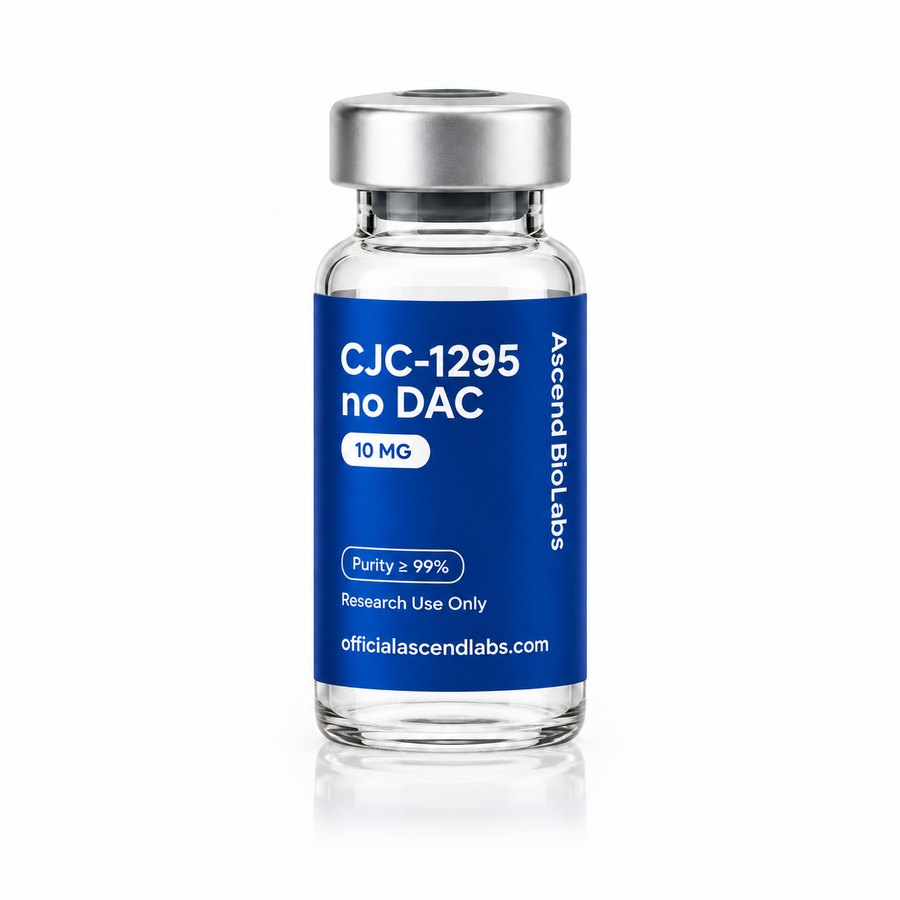 COA RESEARCH USE ONLY
CJC-1295 no DAC
CJC no DAC is a stabilized 29-amino acid GHRH analog studied for its roles in pituitary somatotroph receptor binding, cAMP signaling cascades, and pulsatile growth hormone secretion. A widely characterized compound in endocrine and growth hormone-IGF-1 axis research literature.
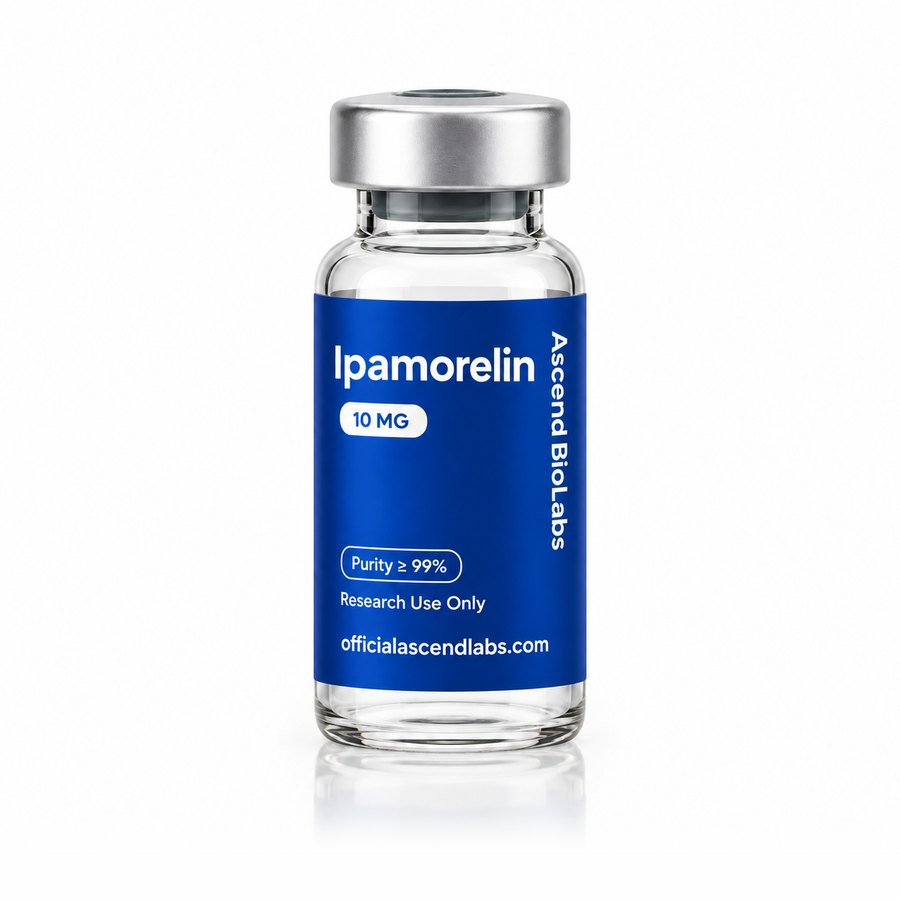 RESEARCH USE ONLY
Ipamorelin
Ipamorelin is a synthetic pentapeptide and selective ghrelin receptor (GHS-R1a) agonist studied for its roles in growth hormone secretion pathways, pituitary somatotroph signaling, and IGF-1 axis modulation. A widely characterized compound in endocrinology and neuroendocrine research literature.
 COA RESEARCH USE ONLY
Tesamorelin
Tesamorelin is a synthetic 44-amino-acid GHRH analog studied for its roles in pituitary somatotroph signaling, hepatic IGF-1 axis modulation, and visceral adipose tissue metabolism. A widely characterized compound in endocrine and metabolic research literature.
 RESEARCH USE ONLY
CJC no DAC/Ipamorelin (5/5mg)
CJC no DAC/Ipamorelin is a combination of a stabilized 29-amino-acid GHRH analog and a selective ghrelin receptor (GHS-R1a) agonist, studied for its roles in dual-pathway pituitary somatotroph co-activation, cAMP signaling cascades, and pulsatile growth hormone secretion. A widely characterized compound pairing in endocrine and growth hormone–IGF-1 axis research literature.
More from Ascend BioLabs Education
- What Are Research Peptides? A Laboratory Primer
- How to Read a Peptide Certificate of Analysis
- HPLC and Mass Spectrometry Purity Testing Explained
- Peptide Storage and Handling for Laboratory Use
- Verifying a Research Peptide Supplier and Research-Use-Only Limits
- Tissue Repair Peptide Research: BPC-157, TB-500 and GHK-Cu
- GLP-1 Class Peptide Research: Retatrutide and Tirzepatide
- Reconstitution and Laboratory Technique for Lyophilized Peptides
- Mitochondrial and Longevity Peptide Research: NAD+, MOTS-c, SS-31 and Epithalon