
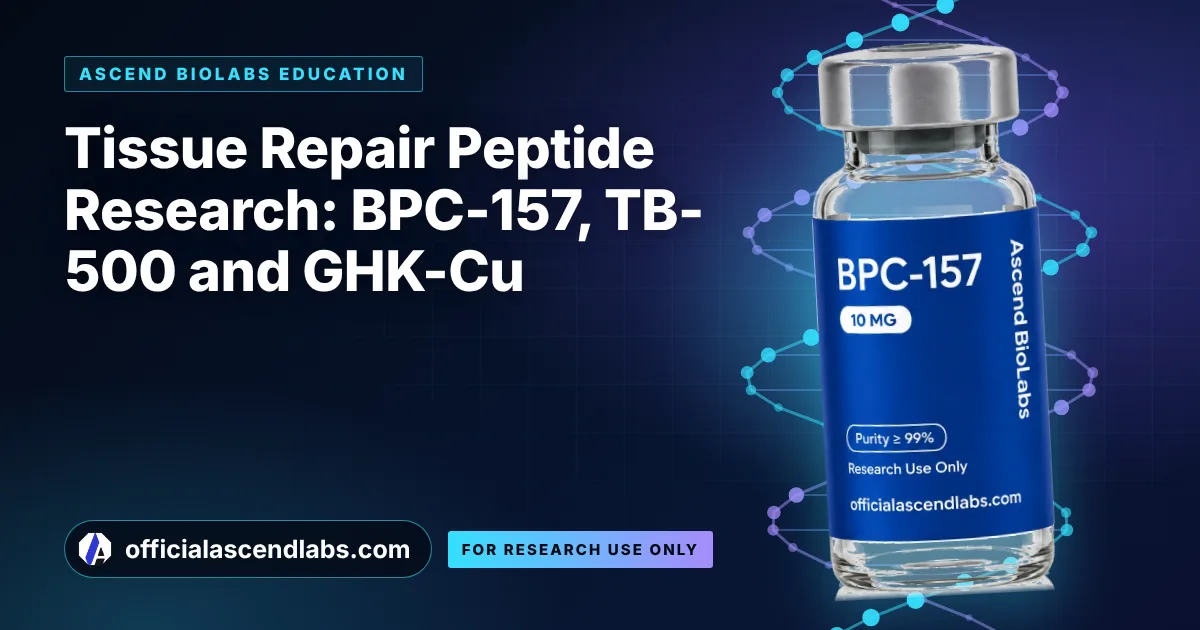
Tissue Repair Peptide Research: BPC-157, TB-500 and GHK-Cu
All Ascend Bio Labs products are sold strictly for in vitro and laboratory research by qualified adults. They are not drugs, foods, cosmetics or supplements, are not for human or veterinary use, and have not been evaluated by the FDA.
Three peptides turn up again and again in preclinical papers on tissue biology: BPC-157, TB-500 and GHK-Cu. This overview describes what the published literature reports at a high level. It is educational and for laboratory research use only; none of these compounds is approved for use in people, and nothing here is medical advice.
BPC-157
BPC-157 is a synthetic pentadecapeptide, meaning a chain of fifteen amino acids, whose sequence is derived from a protein found in gastric juice. Most published work comes from rodent studies and cell cultures examining how it may influence processes such as angiogenesis, growth-factor signalling and the response of tendon, gut and other tissues to injury. Human clinical evidence is very limited, which is one reason it is sold only as a research material. See the individual BPC-157 vial or the BPC-157 capsules for the research formats we list.
TB-500
TB-500 is a synthetic fragment related to thymosin beta-4, a naturally occurring peptide involved in actin regulation, cell migration and wound-healing models. Laboratory studies of thymosin beta-4 and its fragments examine how cells move and how tissues respond in injury models. It is most often encountered in research as a partner to BPC-157.
GHK-Cu
GHK-Cu is a small copper-binding tripeptide (glycyl-L-histidyl-L-lysine) first isolated from human plasma. In vitro and animal studies have examined its effects on collagen synthesis, extracellular-matrix remodelling and gene expression in skin and other cell types, and it has long been a subject of cosmetic-science research.
Why they are studied together
Because tissue repair is a multi-step process, researchers sometimes want to examine several mechanisms side by side. That is the logic behind the blends in our Blends category: the Wolverine blend pairs BPC-157 with TB-500, and GLOW combines GHK-Cu, BPC-157 and TB-500 in one vial.
Documentation matters most with blends
A blend has more ways to go wrong than a single peptide: each component needs its own identity and quantity check. The independent reports published on the COAs page list a separate assay for each component. For example, the GLOW report lists GHK-Cu, BPC-157 and TB-500 individually, and the Wolverine report adds heavy-metal, endotoxin and sterility panels. Learn to read them in our COA guide.
Limits of the evidence
Animal and cell results do not establish safety or effectiveness in people, and conditions in a dish differ from those in a body. Treat the literature as a map of hypotheses rather than answers. The companion news item is BPC-157, GHK-Cu, Wolverine and GLOW reports released.
Related Ascend Products
Four catalog items that match this article. Each is sold for laboratory research use only.
 COA RESEARCH USE ONLY
BPC-157
BPC-157 is a synthetic pentadecapeptide derived from a gastric protective protein, studied for its roles in angiogenic signaling, nitric oxide pathway modulation, and growth factor expression. A widely characterized compound in musculoskeletal and gastrointestinal research literature.
 COA RESEARCH USE ONLY
Wolverine Blend (BPC-157 + TB-500)
Wolverine Blend is a multi-peptide combination of BPC-157 and TB-500 studied for its roles in angiogenesis and VEGFR2 signaling, actin cytoskeletal remodeling, and endothelial repair pathways. A widely cited stack in tissue regeneration and musculoskeletal recovery research literature.
 COA RESEARCH USE ONLY
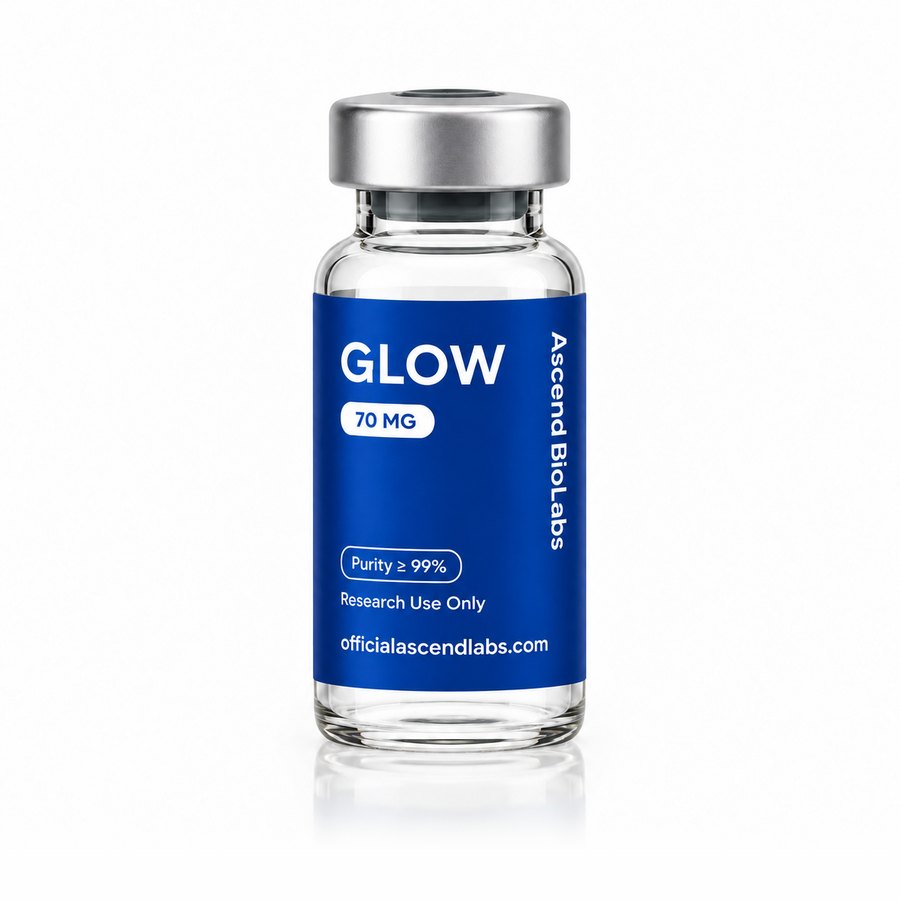
GLOW
GLOW is a multi-peptide blend combining GHK-Cu, BPC-157, and TB-500 studied for its roles in extracellular matrix remodeling, angiogenesis signaling, and cytoskeletal repair pathways. A widely referenced combination in regenerative biology and dermal repair research literature.
 RESEARCH USE ONLY
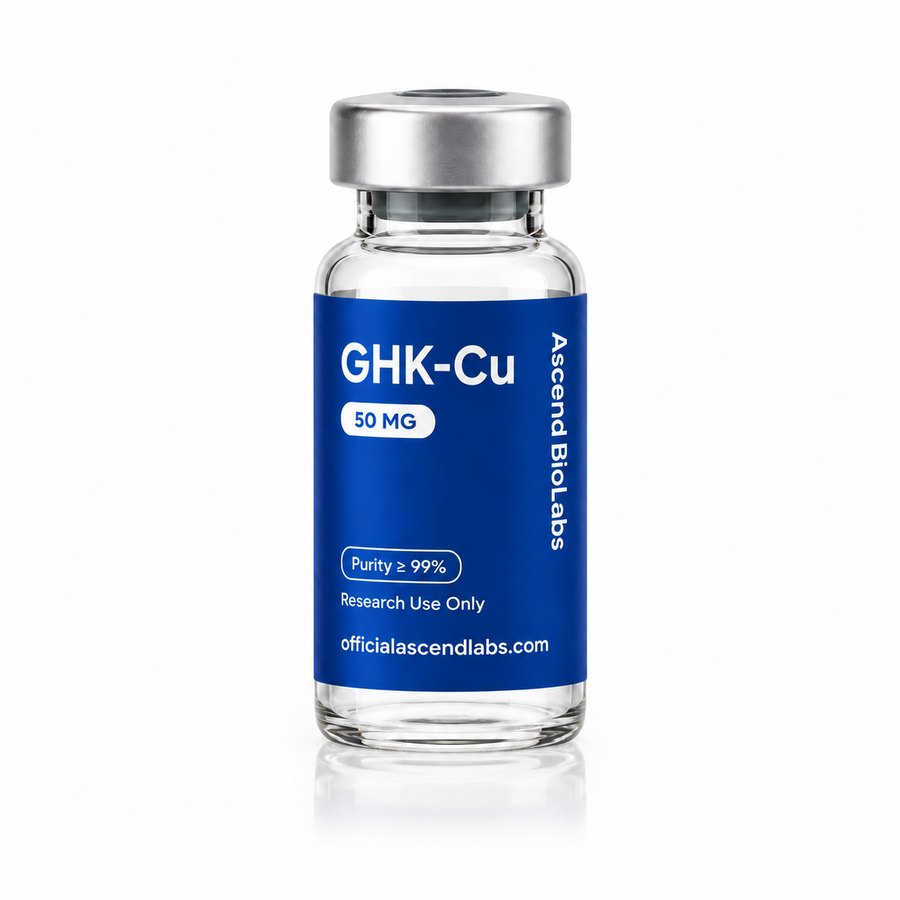
GHK-Cu
GHK-Cu is a naturally occurring copper-bound tripeptide complex studied for its roles in collagen synthesis pathways, extracellular matrix remodeling, and antioxidant enzyme regulation. A widely referenced compound in dermatological and tissue regeneration research literature.
More from Ascend BioLabs Education
- What Are Research Peptides? A Laboratory Primer
- How to Read a Peptide Certificate of Analysis
- HPLC and Mass Spectrometry Purity Testing Explained
- Peptide Storage and Handling for Laboratory Use
- Verifying a Research Peptide Supplier and Research-Use-Only Limits
- Growth Hormone Secretagogue Research: CJC-1295, Ipamorelin and Tesamorelin
- GLP-1 Class Peptide Research: Retatrutide and Tirzepatide
- Reconstitution and Laboratory Technique for Lyophilized Peptides
- Mitochondrial and Longevity Peptide Research: NAD+, MOTS-c, SS-31 and Epithalon